
Localized Formatting & Plurals in MDX
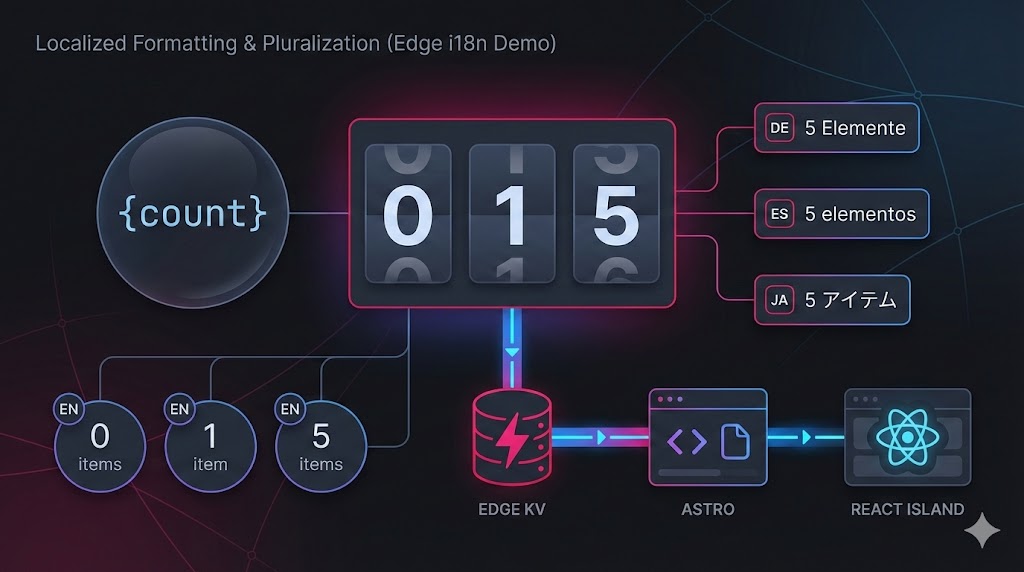
This example shows how interpolation, plural rules, and runtime formatting work inside MDX when using EdgeKits Core’s Zero-JS i18n architecture.
While the previous demo focused on interactive components, this one demonstrates how dynamic text can come directly from Cloudflare KV — even when numbers or UI state change.
A dynamic counter with localized text
Below is a React Island that exposes a simple counter. The component itself contains no English strings. All labels come from KV:
- singular and plural forms (
1 item→5 items) - interpolated values (
{count}) - localized phrasing based on the active locale
Try switching between English and German to see how pluralization changes automatically.
Why this matters
Traditional client-side i18n requires:
- shipping JSON dictionaries to the browser,
- bundling a formatting engine,
- manually wiring pluralization rules,
- updating locale state inside React.
With EdgeKits Core:
- Astro loads the correct translations at the edge.
- Plural and interpolation logic runs server-side, before hydration.
- React Islands receive preformatted, type-safe text.
- No client-side i18n library is needed — 0 KB shipped.
Real-world use cases
This pattern works especially well for:
- price/quantity UI widgets,
- dashboards that require localized labels,
- MDX documentation with embedded interactive demos,
- forms with dynamic validation messages,
- any component where the text depends on numbers or state.
Because translations are stored in KV, content writers can manage phrasing without touching component code — even for complex cases involving plural logic or numeric formatting.